If you’re a dog owner, you’ve likely watched your pup devour their meal in a matter of seconds, leaving you wondering, “Why does my dog eat so fast?” Rapid eating is a common behavior among dogs, but it can lead to serious health and behavioral risks if left unaddressed. In this blog, we’ll explore the causes behind fast eating, discuss potential dangers, and provide practical solutions so your furry friend can develop healthy, enjoyable eating habits.
Why Do Dogs Eat So Fast?
Understanding why your dog eats so quickly is the first step in helping them slow down. Several factors contribute to this behavior, each with its own unique implications.
Evolutionary Instincts
Dogs are descendants of wolves, and their eating habits can be traced back to their wild ancestors. In the wild, food was scarce, and wolves had to eat quickly to avoid losing their meal to another animal. This survival instinct is still present in many domestic dogs, driving them to gulp down food as if competition is just around the corner—even if they’re the only pet in the house.
Learned Behavior
Some dogs develop fast eating habits due to experiences in their early lives. Shelter or rescue dogs often learn to eat quickly because food wasn’t always guaranteed, or they had to compete with others. Even in multi-pet households, competition for resources can encourage dogs to eat rapidly.
Medical Causes
Fast eating can sometimes be a symptom of underlying health issues. Conditions such as malnutrition, intestinal parasites, or metabolic disorders may cause dogs to feel hungrier than normal, prompting them to gobble their meals. Certain medications can also affect appetite and behavior. If your dog’s sudden change in eating speed is accompanied by weight loss, lethargy, or gastrointestinal issues, it’s essential to consult a veterinarian.
Poor Feeding Habits and Environment
Dogs thrive on routine and stability. Irregular feeding schedules, chaotic mealtimes, or feeding areas with too many distractions can cause anxiety, making dogs eat quickly. Establishing a calm, consistent feeding environment is key to addressing fast eating.
The Dangers of Fast Eating
Feeding your dog may seem straightforward, but rapid eating introduces a variety of risk factors that every pet owner should understand.
Choking Hazards
When dogs eat too quickly, they often fail to chew their food properly. This increases the risk of choking, especially with larger kibble or chunks of food. Food can become lodged in the throat, requiring emergency intervention.
Bloat (Gastric Dilatation-Volvulus)
Bloat, also known as gastric dilatation-volvulus (GDV), is a potentially fatal condition common especially in larger breeds. It occurs when the stomach fills with gas, food, or fluid and twists on itself. Eating too quickly increases the amount of swallowed air and food, raising the risk of bloat. Symptoms include restlessness, a swollen abdomen, and unsuccessful attempts to vomit—if you suspect bloat, seek immediate veterinary help.
Vomiting and Indigestion
Rapid eating can lead to vomiting, regurgitation, and uncomfortable indigestion. Dogs who eat too fast may swallow excessive air and food, overwhelming their digestive tract and causing gastrointestinal discomfort.
Poor Nutrient Absorption
Speedy eaters may not properly chew their food, resulting in reduced digestion and absorption of essential nutrients. Long-term, this can impact your dog’s health, leading to deficiencies and developmental issues, especially in puppies.
Food Aggression and Behavioral Problems
Competing for food or rushing meals can trigger food aggression, resource guarding, and anxiety around feeding times. Addressing fast eating can help alleviate these behavioral concerns while promoting overall well-being.
How to Slow Down Your Dog’s Eating
The good news is that there are multiple effective ways to curb your dog’s rapid eating. Here are proven solutions to help your dog develop safer and more mindful eating habits.
Slow Feeder Bowls and Puzzle Feeders
Specialized bowls and puzzle feeders are designed to make mealtime more challenging, encouraging your dog to work for their food. Raised ridges, mazes, or compartments slow the eating process, helping reduce the risk of choking and bloat. Puzzle feeders also provide mental stimulation, turning mealtime into an enriching activity.
Pros:
- Slows down eating effectively
- Provides mental enrichment
- Can reduce food aggression
Cons:
- May take time for dogs to adjust
- Some puzzle feeders require supervision
Portion Control and Feeding Frequency
Instead of giving your dog one large meal a day, consider dividing it into two or more smaller meals. This helps regulate hunger and makes it easier to pace eating. You can even split portions between multiple bowls or locations to slow the process further.
Training and Environmental Changes
Creating a calm, distraction-free feeding environment encourages mindful eating. Separate pets during mealtime to eliminate competition, and try command-based feeding, teaching your dog to sit or wait before eating. Positive reinforcement can reinforce slower, more deliberate eating.
DIY Solutions
You don't need expensive tools to slow down eating. Place food in a muffin tin, spreading it among individual compartments, or scatter kibble on a flat surface to make your dog take time finding each piece. Food-dispensing toys, such as treat balls or snuffle mats, can also encourage slower eating and mental engagement.
When to Consult a Veterinarian
If your dog’s eating habits change suddenly, or if they experience ongoing digestive issues, excessive hunger, weight loss, or other concerning symptoms, a trip to the vet is necessary. Rule out underlying health problems and ask for personalized advice on managing mealtime behaviors.
Create A Better Mealtime Experience For Your Dog
If your dog eats too quickly, mealtime can become stressful instead of enjoyable. The right feeding routine can help slow down eating, encourage natural behaviors, and make every meal more engaging.
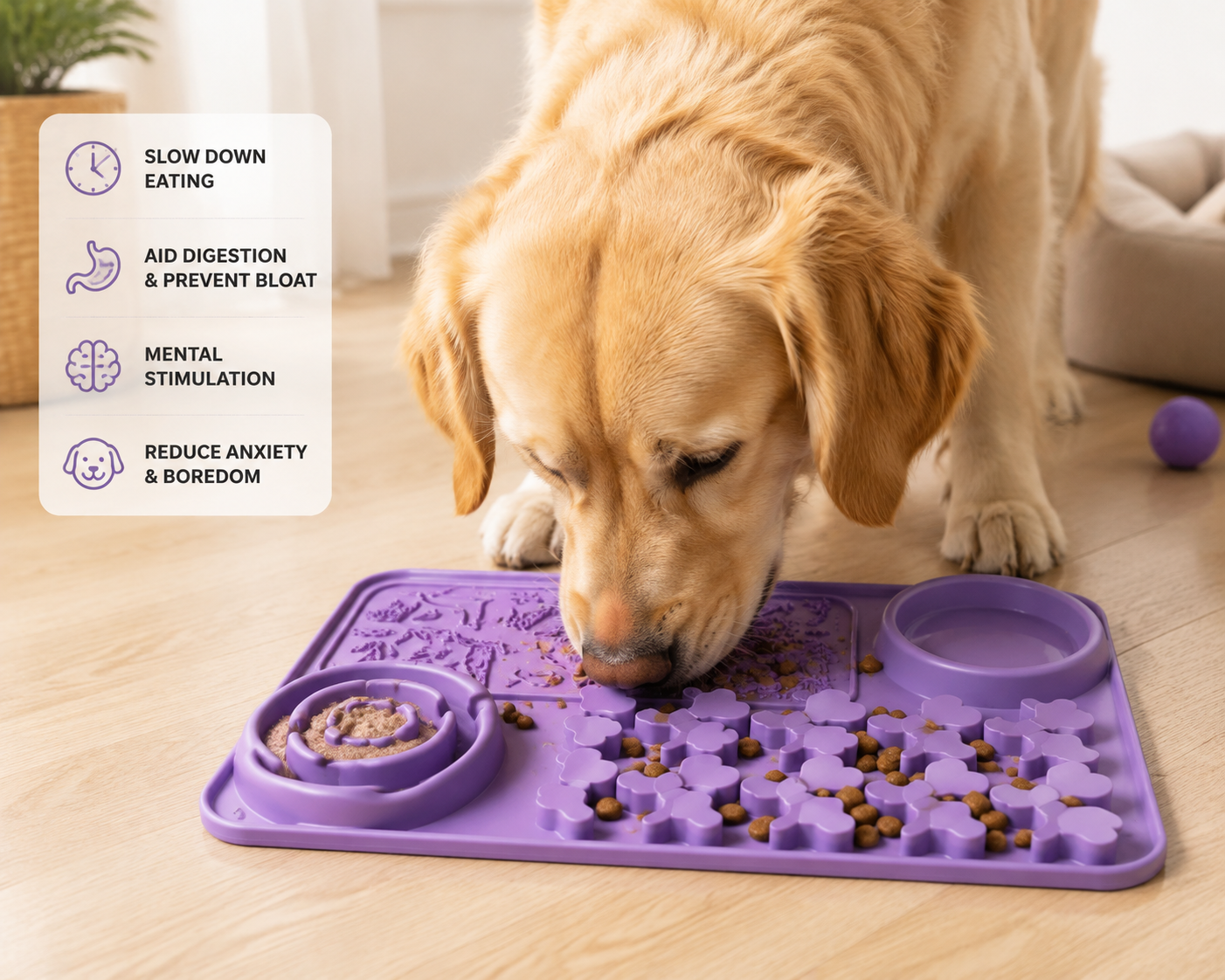
Heeipaw’s silicone slow feeder mat is designed to turn ordinary meals into a rewarding enrichment activity. With textured surfaces and interactive sections, it helps encourage slower eating while providing mental stimulation during mealtime.
Whether your dog is a fast eater, easily bored, or simply loves exploring new challenges, a slow feeder mat can be a simple upgrade to their daily routine.
Give your dog a healthier, happier way to enjoy every bite.